
MARKET NOTES · CHINA · 2026
China’s squishy trend moved off the screen
For three years the category lived in feeds and order pages. In 2026 the growth moved onto shop floors, mall concourses and weekend market tables — and that changes how these products are designed, priced and sourced.
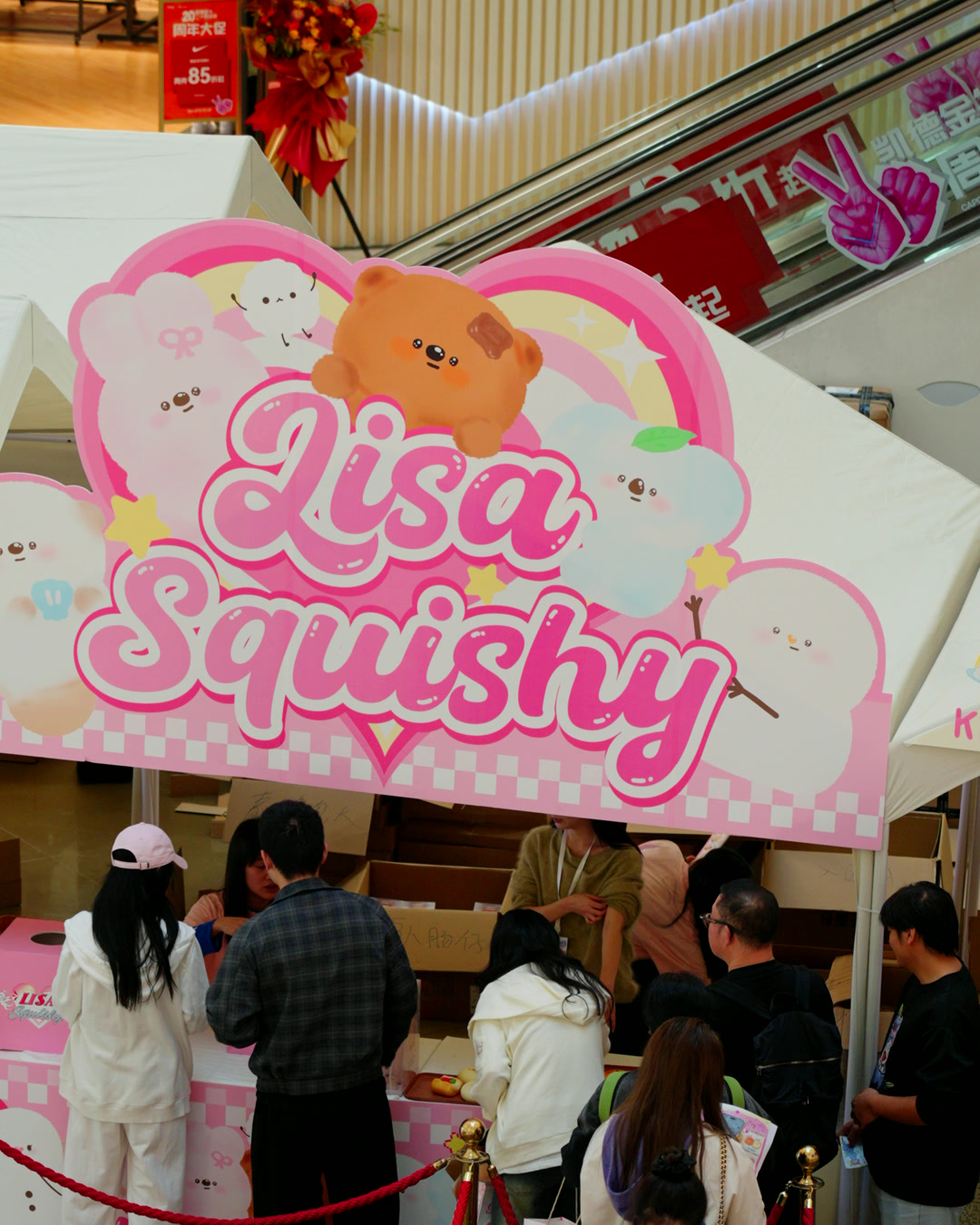
For most of the last three years, the Chinese squishy market was a screens-only business: a Xiaohongshu post, a Douyin clip, a Taobao order. That phase is over. In 2026 the category’s growth moved onto shop floors, mall concourses and weekend markets — and the shift is reshaping how these products are designed, priced and sourced.
The short version
- A single squishy concept store in Hangzhou’s Hubin district reports roughly 4,000 visitors on a weekday and up to 7,000 on holidays.
- A mall in Wuhan hosted a 60-stall squishy and stress-relief festival across the National Day holiday.
- Shanghai brands now run permanent stores, themed pop-ups and boutique slow-flash spaces at the same time, and appear at city cultural events.
- Global stress-relief toys: about $6.26B in 2026, forecast to reach roughly $8.96B by 2030. Premium slow-rising is the fastest-growing sub-segment, at around 15% CAGR.
- China’s emotional-consumption market is cited at ¥2.72 trillion.
What actually changed in 2026
Three formats now define the category, and each one is doing a different job.
In Hangzhou, a squishy concept store in the Hubin commercial area reports weekday footfall near 4,000 and holiday peaks of 7,000, with 60% local repeat customers and 40% out-of-town traffic. Its shelf is deliberately split: 30% house brand, 60% a collective of independent Chinese designers, 10% limited collaborations. Retail runs ¥29–89, blind boxes ¥29–59, and new drops land every week.
In Wuhan, a mall ran a squeeze-and-decompress festival over the National Day holiday, with more than 60 stalls selling squishies, slime and fidget toys. It was a market, not a brand activation — closer to a craft fair than a product launch.
In Shanghai, one local brand expanded from a slow pop-up in Pudong to a store on Huaihai Road, a large themed pop-up on Nanjing East Road and a boutique slow-flash at Grand Gateway — and took a stall at the Shanghai International Light Festival’s riverside night market in September. A second brand opened its first permanent store at Joy City on October 1, designed as a dessert playground.
Why the category had to go physical
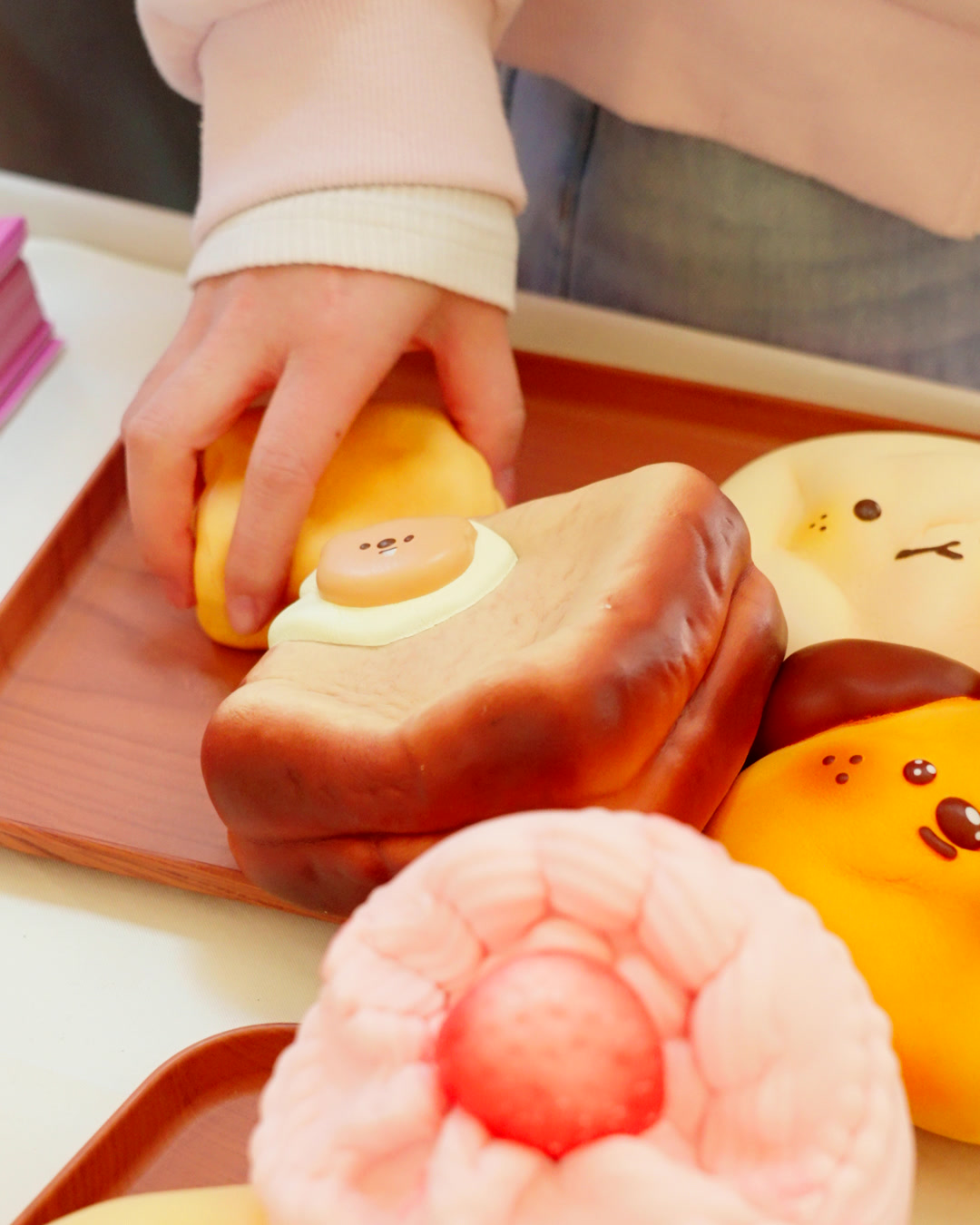
A listing page can show you shape. It cannot show you resistance, recovery time or scent. A buyer who wants a firmer, slower hand-feel and a buyer who wants a soft, fast rebound are looking at the same photograph.
Physical retail is the only channel where the product can actually be evaluated — which is why marketing budgets moved from ad spend to rent. It also explains why the strongest content in this category is no longer a product shot. It is a three-second clip of a thumb sinking into a bun that has not sprung back yet.
Three retail formats that emerged
Designer-collective stores
One storefront acting as a distribution outlet for dozens of small studios. It solves the studios’ biggest problem: they can make product, but they cannot run retail. For a buyer, the useful side effect is that a single shelf becomes a de facto trade show. You can see which shapes sell, which price points hold and which finishes survive a week of handling.
Themed pop-ups and slow-flash spaces
Short-cycle, high-exposure mall placements built to catch holiday footfall and overseas tourists. They are also the formats where the visual identity of a brand is tested before anyone commits to a lease. A pop-up that fails costs a build-out; a store that fails costs a year.
Weekend markets and festivals
The 60-stall decompression fair model. This is the lowest-cost way to test styles, price points and hand-feel against real crowds, and it is where a lot of the category’s product feedback actually originates. A studio can put an untested shape on a market table on Saturday and know by Sunday evening whether it works.
What this means if you buy from China
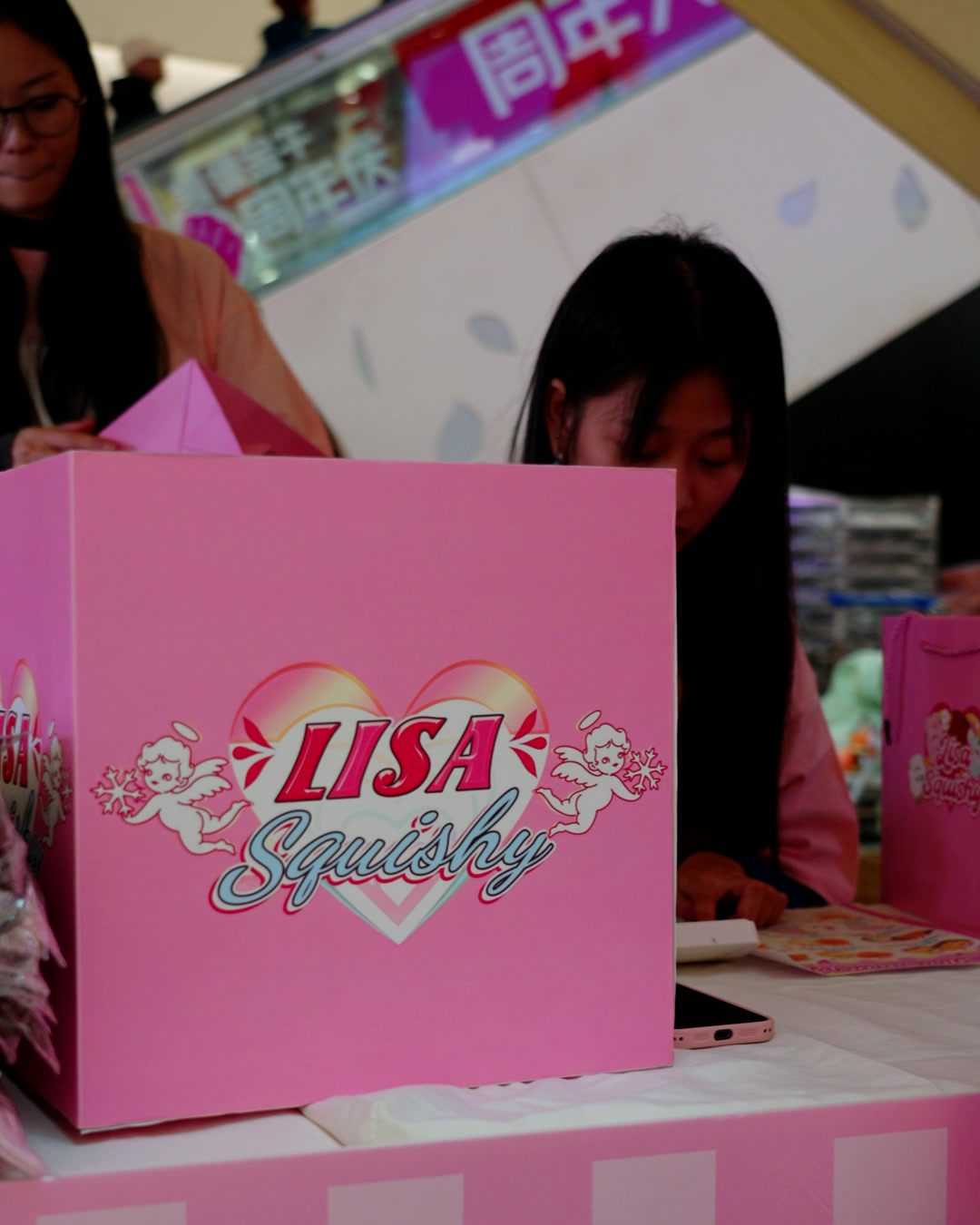
Wholesale supply is now visible. A store running 60% third-party designer stock is effectively a trade show with a lease. Walk the shelf, note what sells, and trace the studios behind it. Eighteen months ago that supply was buried inside a marketplace listing with no way to tell a real factory from a reseller.
Price anchoring has moved up. Mall rent, staff and pop-up build-outs are now inside the retail price. Expect less room to negotiate than in the pure e-commerce era, and expect the reference price your retail partner quotes to come from a shop tag rather than a marketplace listing.
Tourist traffic is a real export channel. Buyers from Thailand and Korea fly in to shop in person, and many discover brands on Instagram or TikTok before they arrive. That is a physical export lane running parallel to the marketplaces, and it produces customers who already know the product by hand before they place a wholesale order.
Minimum viable batches are shrinking. Studios that restock weekly are used to small runs, which suits importers testing a new market. It also means colour and shape ranges rotate faster than a container-based order cycle can follow, so the range you approve in March may not be the range shipping in June.
The risks the press releases skip
Copying is fast and rampant, and quality control varies wildly between studios. Material safety compliance is tightening: China’s GB 6675.14-2025 standard now governs these products domestically, and export markets apply their own regimes on top. And there is still no category-defining brand — nobody has become the reference name for slow-rising squishy, which means both an open field and an unstable one.
For a buyer, the practical consequence is that the sample matters more than the catalogue. Two studios can pour the same shape into the same mould with the same shot weight and produce two different objects in the hand. If you are evaluating a supplier, the question worth asking is not what they can make but what their cure consistency looks like across a run.
FAQ
Why are squishy stores suddenly everywhere in China?
Three forces converged. Hand-feel can only be validated in person, malls needed traffic drivers that appeal to under-30s, and the designer-collective model dropped the cost of stocking a single store from a full buy to a split shelf. None of those three alone would have been enough.
What is a slow-rising squishy?
A squishy that returns to shape slowly after compression — seconds rather than instantly. The slow recovery is the point: it is what makes the object feel substantial in the hand, and it is the main thing that separates a premium piece from an ordinary foam toy at twice the price.
Where can I see these products in person?
Shanghai (Huaihai Road, Nanjing East Road, the Xujiahui and Grand Gateway area), Hangzhou’s Hubin district, and mall pop-ups in Chengdu and Xi’an. Weekend markets rotate and are usually announced on Xiaohongshu a few days ahead, so the reliable approach is to check local listings the week you arrive rather than planning around a fixed venue.
Can overseas buyers purchase directly?
Yes, but three things decide the deal: minimum order quantity, whether you are buying a licence for a territory, and compliance documentation for your market. Studios that sell well domestically are not automatically set up to export, and the paperwork gap is usually where a first order stalls.
The practical next step
If you are sourcing this category, the first useful thing to request is not a catalogue. It is a sample set across two or three hand-feel grades, so you can decide which one your market actually wants before anyone discusses price. Hand-feel is the specification; everything else is packaging. You can request a sample set through our wholesale inquiry page.
Sourcing this category?
Lisa Squishy makes original slow-rising squishy toys for retailers, distributors and regional partners. Sample sets, MOQ and territory licensing are discussed after inquiry.
Start a wholesale inquiry